

Stretford Grammar Year 12 Literature Students Visit Dove Cottage
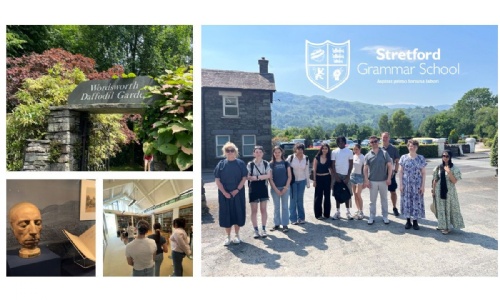
On Friday 26 July, Year 12 English Literature students from Stretford Grammar School travelled to the Lake District to visit Dove Cottage and the Wordsworth Museum. The excursion forms a regular part of the department's A Level provision, designed to support the study of the Paper 3 Poetry unit on the Romantic movement. The group experienced clear skies and warm weather throughout the day, providing ideal conditions to view the landscape that influenced the writer.
The Landscape of the Romantic Movement
The Lake District held a central position in the imagination of the Romantic poets. Writers such as William Wordsworth, Samuel Taylor Coleridge, and Robert Southey rejected the industrialisation and urban growth of the late 18th century. They sought instead a return to nature.
The dramatic topography of Cumbria—characterised by isolated fells, deep lakes, and unpredictable weather systems—offered the poets an encounter with the 'Sublime'. This concept defined an experience of awe and scale that regular city life could not provide. The landscape became a source of spiritual renewal and a primary subject for their creative work.
Wordsworth's Literary Significance
William Wordsworth remains a foundational figure of British Romanticism. Alongside Coleridge, he published Lyrical Ballads in 1798, a text that marked a deliberate break from the formal, rigid poetic structures of the 18th century.
Wordsworth advocated for poetry written in the "language of men," focusing on ordinary people, rustic life, and personal emotion. His philosophy centred on the idea that poetry originates from "emotion recollected in tranquillity," positioning human feeling and the natural world above intellectual artifice.
Insight into Dove Cottage and the Learning Centre
Dove Cottage served as Wordsworth’s home between 1799 and 1808, a period considered his most productive. The preserved slate floors, low ceilings, and dark wood panelling offer a glimpse into the austere conditions where he composed masterpieces such as Ode: Intimations of Immortality and portions of The Prelude. Adjacent to the cottage, the modern Learning Centre and Museum houses an extensive collection of original manuscripts, journals, and letters. This facility allows students to examine the physical process of composition, from first drafts to published editions.
"To stand in the very rooms where Wordsworth lived and worked clarifies the context of Paper 3," noted Mrs Baxter, Headteacher. "The physical environment explains the focus on simplicity and nature found in the texts."
Students spent the afternoon utilising the archive materials to analyse early drafts of the set poems, gaining insight into the revisions that shaped the final works.
"The archive session allowed our students to engage with the reality of literary production," added Dr Quipp, Curriculum Leader for English. "They observed how raw experience of the Cumbrian landscape transformed into structured verse."
The department expects the insights gained from the visit to inform classroom debate and essay writing as the cohort enters their final year of A Level study.